
annealing Archives - AGS Custom Parts
17 Aug 2026

10 Years of AGS Custom

August 16, 2016 – August 16, 2026

Ten years.

It sounds simple when written down, but looking back, it is difficult to fit everything that happened during those ten years into just a few paragraphs.

AGS Custom started in 2016 with a simple idea: to build products that we, as shooters, would actually want to use ourselves.

There was no grand corporate plan behind it. No large team, no investors, and no established international distribution network. Just an idea, a workshop, a lot of testing, and the belief that good shooting equipment did not have to be unnecessarily complicated or expensive.

What started in Serbia gradually found its way onto shooting benches around the world.

From an Idea to a Product

Like most products designed by shooters, our early designs came from trying to solve practical problems.

We built things, tested them, changed them, sometimes discarded them completely, and started again.

That philosophy eventually became one of the foundations of AGS Custom:

Keep it simple. Make it reliable. Make it work.

Over the years, our products evolved significantly. Designs changed. Manufacturing improved. New versions were introduced. Customer feedback showed us things that we could never have discovered on our own.

But one principle remained unchanged.

We wanted to build equipment that we would be comfortable putting on our own reloading bench.

The AGS Annealer

One product eventually became particularly important to our story: the AGS Brass Annealer.

The concept was straightforward — create a compact, robust and affordable annealing machine that could provide reloaders with a consistent and repeatable process without unnecessary complexity.

That original concept has continued to evolve.

Generation after generation brought improvements in mechanics, electronics, usability and caliber capability.

Today, the AGS Annealer platform covers cartridges all the way up to .50 BMG, while features such as our dual-torch configuration allow shooters to significantly reduce processing time.

And in 2026 we introduced another major step forward: the AGS Annealer V3.3 PRO, designed for automatic case-feeder integration.

What started as a relatively simple machine has become an entire product platform.

But its basic purpose remains exactly the same:

Spend less time processing brass and more time shooting.

From Serbia to the World

Perhaps one of the most rewarding parts of the last ten years is seeing how far AGS has travelled from where it started.

What began as a small Serbian company gradually reached shooters across Europe, North America and other parts of the world.

The United States became an especially important part of that growth. Over the years, more and more AGS machines found their way onto American reloading benches, and the U.S. grew into one of our key markets.

In 2025, we established AGS Custom LLC in Wyoming, marking another important step in our long-term commitment to the U.S. market and creating a foundation for further growth there.

At the same time, we continued developing relationships with dealers and customers across Europe and beyond.

Thousands of machines have left our workshop over the years and ended up on reloading benches belonging to recreational shooters, competitors and serious precision-rifle enthusiasts around the world.

For a company that started from a small workshop in Serbia, that still means something to us.

A lot.

Built Around Shooting

There is another part of AGS that has always been important.

We don’t simply manufacture shooting equipment.

We shoot.

We reload our own ammunition. We test equipment on the range. We compete. We make mistakes, change loads, chase consistency and occasionally spend far too much time trying to understand what happened to a group.

In 2026, that journey even took us to Bisley and the F-Class World Championships.

Experiences like that continually remind us who we are building our products for.

Because ultimately, we are those people too.

That is why the words we have used for years still describe AGS better than any corporate slogan could:

From shooter, for shooters.

Ten Years of Customers

None of this would exist without the people who decided to trust a relatively unknown company from Serbia.

Especially those who did it in the early years.

Every customer who bought a machine, recommended AGS to another shooter, sent us feedback, posted a photo, made a video, wrote a review or simply contacted us with an idea became a small part of this story.

Some of the best improvements we have made over the years started with a customer asking:

“Have you ever thought about doing it this way?”

Sometimes we had.

Sometimes we hadn’t.

And sometimes that question eventually became a new product.

For that, we are genuinely grateful.

The Next Ten

Ten years is an important milestone.

But we don’t see it as a finish line.

If anything, 2026 feels more like the beginning of AGS’s next chapter.

We are developing new products, expanding our capabilities, strengthening our presence in key markets and continuing to improve the products that brought us here.

There are still plenty of ideas sitting on our desks.

Some will probably never leave the prototype stage.

Others may become the products we will be writing about when AGS turns twenty.

That’s part of the process.

For now, we simply want to say:

Thank you.

To everyone who bought an AGS product.

To our dealers and partners.

To the shooters who recommended us.

To those who criticized something and pushed us to improve it.

And to everyone who has followed this journey during the last ten years.

You helped turn a small idea from Serbia into something we could hardly have imagined in 2016.

The first ten years were quite a ride.

Now let’s see what we can build in the next ten.

— AGS Custom

From shooter, for shooters.

27 Apr 2026

Consistency Isn’t an Upgrade — It’s the Baseline

At some point, every shooter runs into the same problem.

Not a broken rifle.
Not bad optics.
Not even bad technique.

Just results that don’t match expectations.

Sometimes it works.

Sometimes it doesn’t.

And there’s no clear reason why.

Where most people stay

Most shooters never really solve this.

They adapt to it.

— “good enough”
— “it happens”
— “that one was probably me”

And over time, that becomes normal.

What changes everything

The shift happens when you stop looking for single fixes.

And start looking at the process as a whole.

Because accuracy isn’t just about:

— the rifle
— the load
— the conditions

It’s about whether everything behaves the same way every time.

This is where brass comes in

Brass is the only component that:

👉 changes every single cycle

Everything else stays relatively stable.

Brass doesn’t.

If you don’t control that:

— your process isn’t stable
— your results won’t be either

You can control powder, bullets and primers from the start.
Brass is the only component that drifts — unless you control it.

My turning point

At one point, I had a load that worked.

— good groups
— consistent performance
— predictable behavior

Then it started to change.

Nothing obvious.

Just:

— groups opening up
— occasional flyers
— results that didn’t match what I expected

At first, I blamed everything else.

Like most people do.

What actually fixed it

It wasn’t a new powder.

It wasn’t a different bullet.

It wasn’t a new rifle setup.

It was control.

👉 making sure the brass behaved the same every time

No guessing.

No “this one might be different”.

No relying on luck.

What consistency really gives you

Consistency doesn’t make you a better shooter overnight.

But it removes variables.

And when variables are removed:

— mistakes become obvious
— results become repeatable
— confidence increases

This applies everywhere

At the range:

— groups tighten
— behavior stabilizes

In competition:

— fewer surprises
— more predictable outcomes

In hunting:

— more confidence in the shot
— less second-guessing

The difference

At some point, the difference becomes clear:

Some shooters keep adjusting.

Others:

👉 build a process that doesn’t need adjusting

What this means

This isn’t about chasing perfection.

It’s about removing randomness.

Because once randomness is gone:

👉 performance becomes predictable

Final thought

Consistency isn’t something you add later.

It’s not an upgrade.

👉 it’s the baseline

26 Apr 2026

How to Keep Your Brass Consistent (Without Overcomplicating It)

Once you realize that consistency matters, the next question is simple:

How do you actually keep it?

The mistake most people make is trying to fix everything at once.

You don’t need that.

What you need is control over a few key variables.

Start with one principle

You don’t need a perfect setup.

You need a repeatable one.

Because consistency doesn’t come from doing things “right” once.

👉 it comes from doing the same thing every time

Control what actually changes

Most components stay the same:

— powder
— bullets
— primers

Brass doesn’t.

It changes every cycle.

So your job is simple:

👉 bring it back to the same condition every time

Keep your brass organized

This is where most people lose control early.

— mixing different lots
— mixing different firing counts
— losing track of cycles

Result:

👉 inconsistent behavior before you even start

What helps:

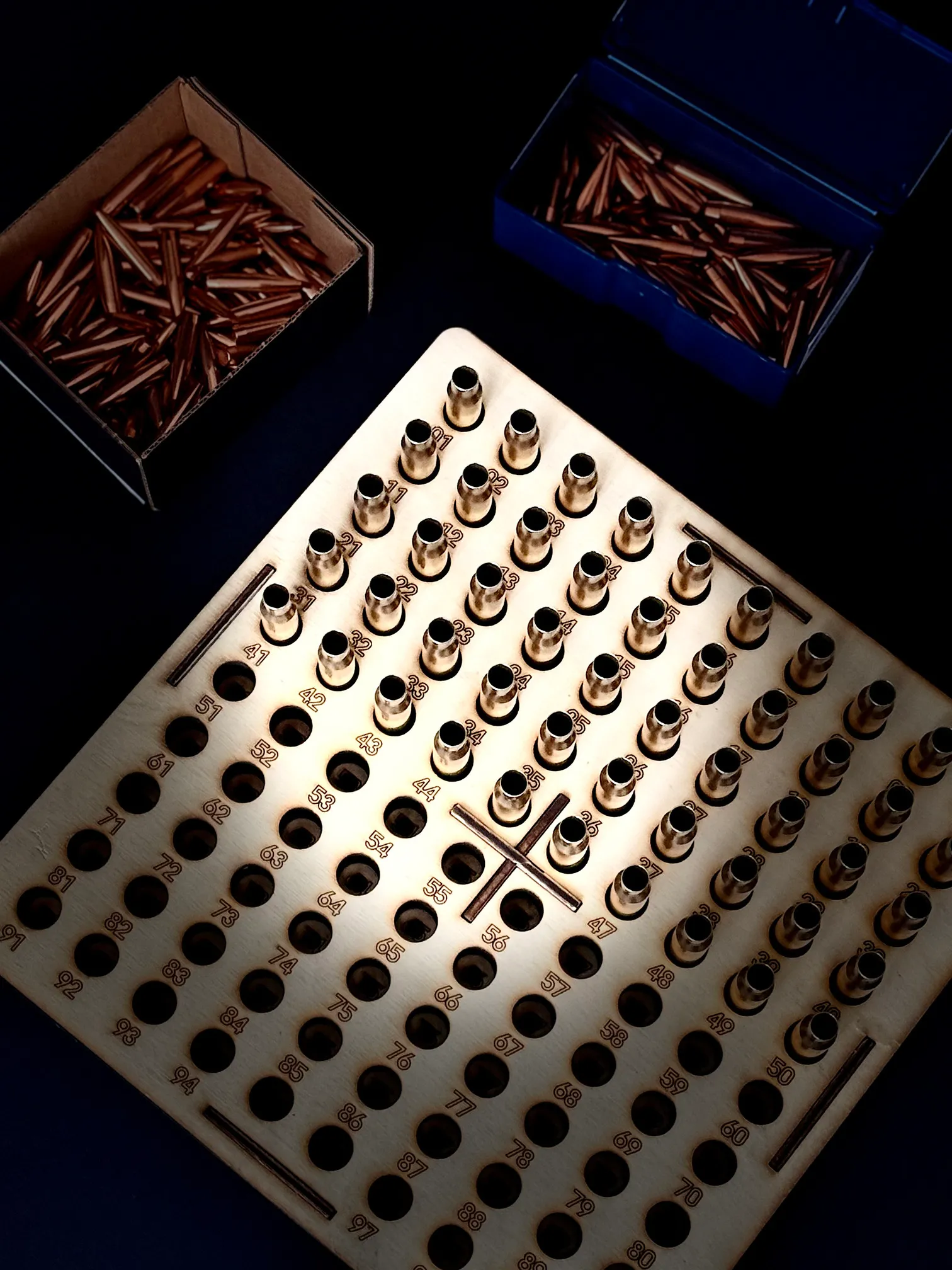
— keep brass in batches
— track number of firings (even roughly)
— don’t mix “fresh” and “tired” cases

Pay attention to sizing

Sizing isn’t just about making the case fit.

It directly affects neck tension.

What matters:

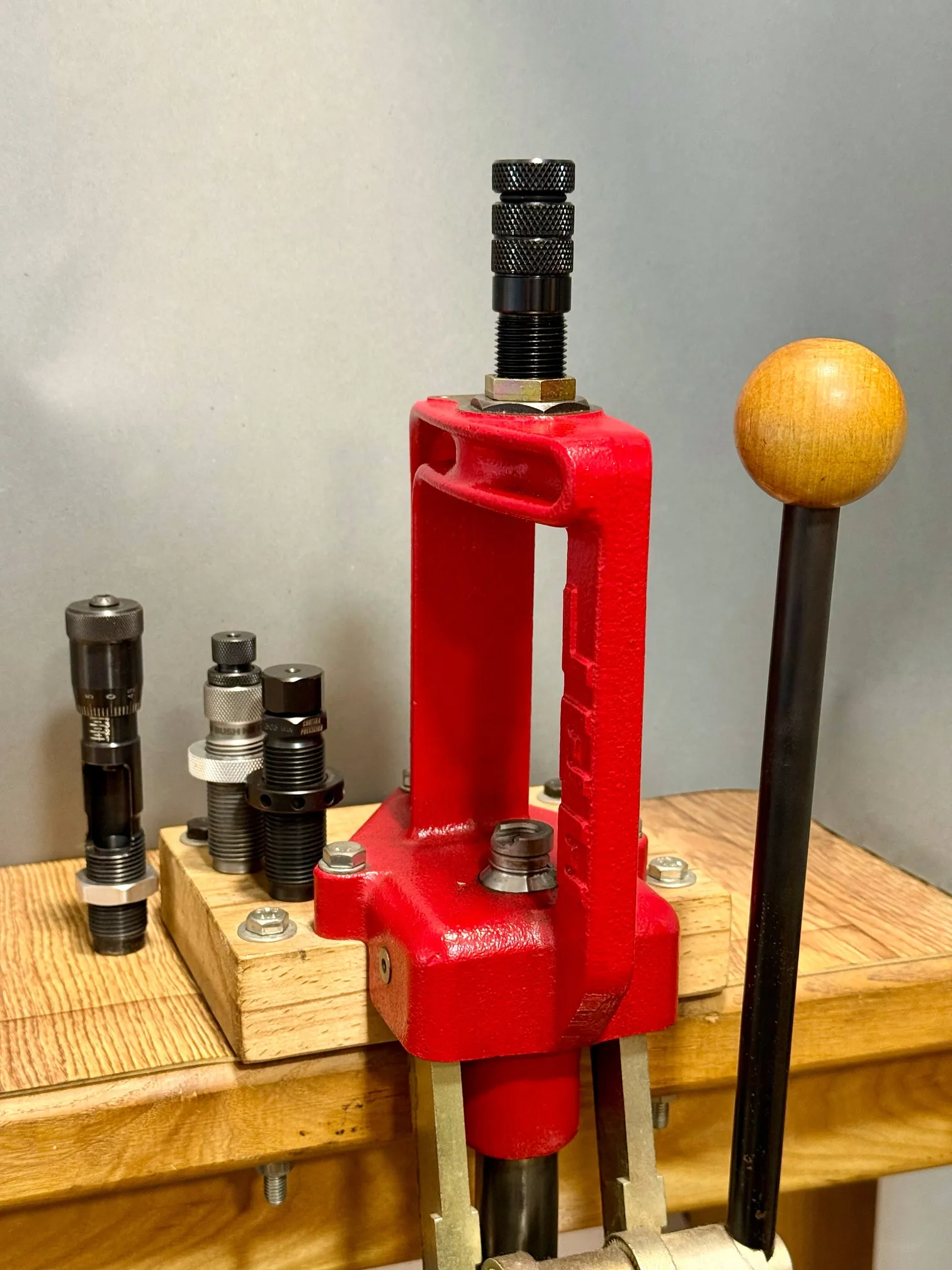
— consistent die setup
— consistent bushing choice (if used)
— minimal variation in neck sizing

For most precision applications:

— 0.001–0.002″ neck tension is enough

For hunting or rough handling:

— 0.003–0.004″ gives more bullet hold

The key isn’t the number.

👉 it’s that it stays the same

Seating force tells you more than you think

You don’t always need instruments.

You can learn a lot from the process itself.

— some bullets seat smooth
— some take more force

That difference matters.

Not everyone can feel it consistently by hand.

But there are simple tools that can measure it.

Either way:

👉 variation here is a signal

Don’t ignore annealing

At this point, it should be obvious:

If brass keeps changing, you need to reset it.

That’s what annealing does.

— reduces work hardening
— stabilizes neck behavior
— improves consistency across cycles

It doesn’t need to be complicated.

But it needs to be repeatable.

Keep the process simple

You don’t need 10 variables.

You need control over a few:

— consistent brass condition
— consistent sizing
— consistent seating
— consistent annealing

That’s enough to remove most of the guesswork.

What happens when you get it right

When your process is consistent:

— seating feels the same
— velocities stabilize
— groups become predictable

You stop chasing problems.

And start seeing patterns.

What this means

You don’t need perfect gear.

You don’t need complicated routines.

You need:

👉 a process you can repeat

Where this leads

At this point, the difference becomes clear:

Some shooters adjust constantly.

Others:

👉 build a process that doesn’t need adjusting

Next

In the final post:

— how to remove guesswork completely
— what a controlled process actually looks like
— and why that’s what makes the difference

24 Apr 2026

What Happens When Brass Is Not Annealed — Or Annealed Inconsistently

By now, it should be clear that annealing isn’t about the method.

It’s about consistency.

But what happens when that consistency isn’t there?

Whether brass is not annealed at all — or annealed inconsistently —
the result is the same:

👉 performance starts to drift

It doesn’t fail immediately

One of the biggest misconceptions is that something has to go visibly wrong.

— split necks
— damaged brass
— obvious defects

That’s not how it usually starts.

Most of the time, it begins quietly:

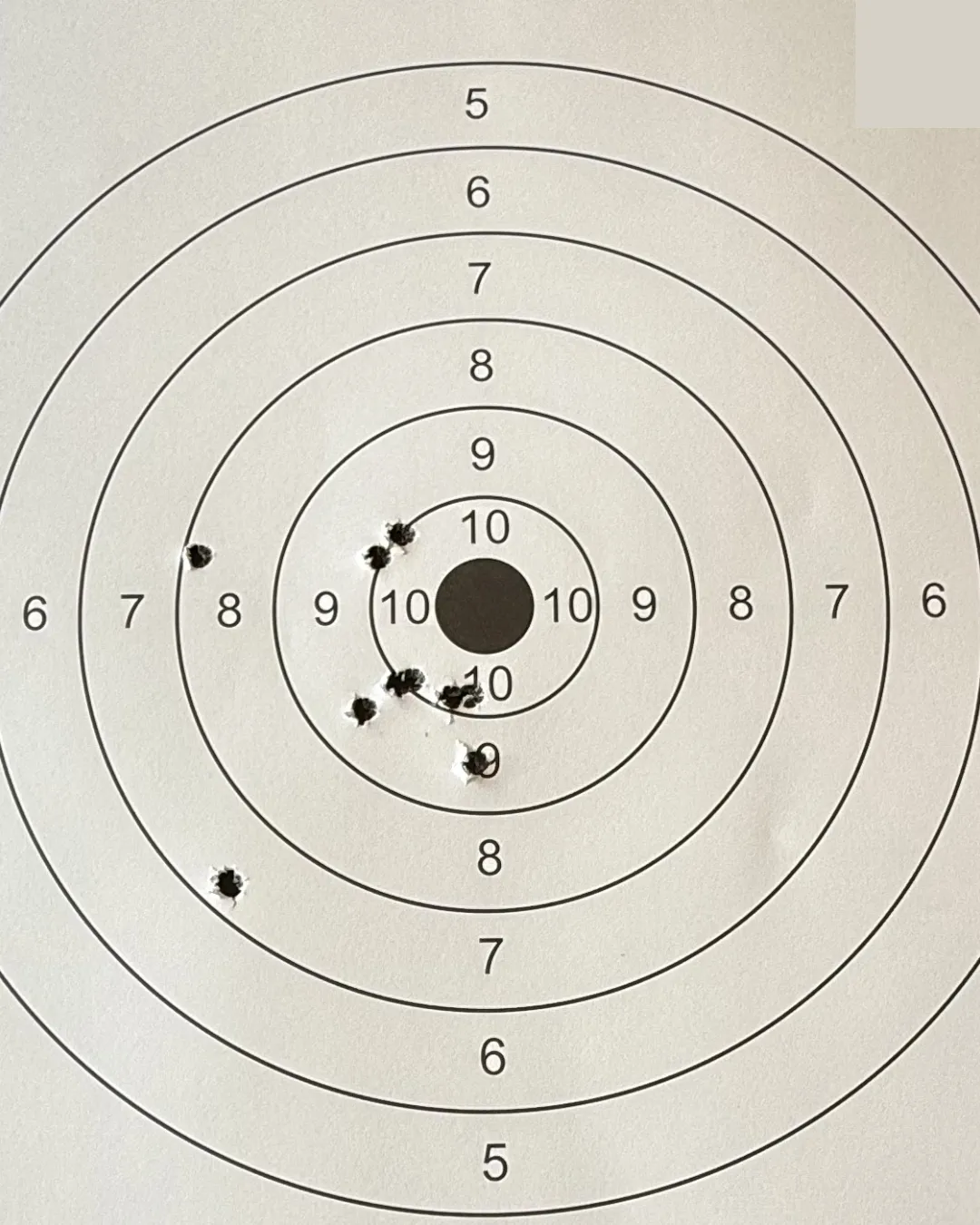
— groups slowly open up
— an occasional flyer appears
— velocity starts spreading

And it’s easy to blame something else.

When brass is not annealed

With repeated firing and resizing:

— brass work-hardens
— spring-back increases
— neck tension becomes less consistent

Even if everything else in your process stays the same:

— the brass itself is changing

Result:

— same load, different behavior
— inconsistent bullet release
— growing ES/SD

When annealing is inconsistent

This is just as common — and often harder to notice.

Some cases are:

— slightly softer
— slightly harder

Not enough to see.

But enough to matter.

Result:

— seating force varies
— pressure curve changes
— velocity variation increases

And eventually:

👉 it shows on target

What it looks like in practice

You go to the range with a load that used to shoot well.

At first:

— everything looks fine

Then:

— one shot opens the group
— another drifts slightly
— one goes completely off

Now you start thinking:

— wind?
— scope?
— shooter error?

Sometimes, yes.

But often:

👉 it’s brass inconsistency

It adds up

Each of these on its own:

— small variation in neck tension
— slight velocity differences
— minor inconsistencies

May not seem like much.

But together:

— they stack

That’s how a 1 MOA rifle becomes a 2 MOA rifle — or even worse.

Not because anything suddenly broke.

But because consistency was lost.

The hidden cost

When this happens, most people don’t immediately look at brass.

Instead, they start adjusting:

— seating depth
— powder charge
— components

Trying to fix something that isn’t actually the root cause.

That costs:

— time
— components
— confidence

The key point

Skipping annealing — or doing it inconsistently — doesn’t always ruin your brass.

But it removes one of the biggest advantages you can have:

👉 repeatability

What this means

If your brass is changing from cycle to cycle:

— your results will change
— your load won’t behave the same
— your confidence drops

If your process is consistent:

— results stabilize
— behavior becomes predictable
— performance improves

Where this leads

At this point, the question is no longer:

“Should I anneal?”

But:

👉 “Can I keep my brass behaving the same every time?”

Next

In the next post:

— how to recognize correct annealing in practice
— what to look for
— simple indicators your process is working